
Market entry insight
How Japanese Companies Can Find and Qualify UK or European Distributors
A practical guide for Japanese companies on finding, vetting, and prioritizing UK and European distributors, resellers, and agents before market entry.

For many Japanese companies, finding a distributor in the UK or Europe can look straightforward: search online, collect names, send emails, attend a trade show, and wait for interest.
In practice, distributor selection is one of the most important early decisions in market entry.
The right partner can help a Japanese company understand local buyers, build credibility, manage early sales conversations, and avoid costly mistakes. The wrong partner can slow momentum, create channel conflict, weaken brand perception, or lock the company into an agreement that is difficult to unwind.
A strong distributor search is not just a list-building exercise. It is a structured process for identifying, comparing, and qualifying commercial partners before making serious commitments.
Why Distributor Selection Matters for Japanese Companies Entering the UK or Europe
A distributor can shape far more than sales volume.
In a new market, the distributor may influence pricing expectations, customer feedback, after-sales experience, local positioning, and the first impression buyers have of the Japanese company. If the distributor has strong relationships and understands the category, that can accelerate learning and open doors. If the distributor is poorly matched, even a strong product can struggle.
This is especially important in Europe, where markets differ by language, regulation, buying behavior, logistics, and business culture. A company that performs well in Japan cannot assume the same partner model will work in the UK, Germany, France, the Netherlands, Italy, Spain, the Nordics, or other European markets.
Japanese companies often need more than names. They need local context, bilingual or cross-cultural support, and a practical way to judge whether a distributor is credible before investing in samples, travel, contracts, or exclusivity.
Distributor search should therefore sit inside a broader market-entry plan. Before choosing a partner, the company should be clear about target countries, buyer segments, product fit, pricing assumptions, support requirements, and relationship strategy.
What Types of European Partners Should Japanese Companies Consider?
Not every commercial partner is a distributor. Choosing the wrong partner model can create confusion from the first conversation.
A distributor usually buys and resells products. Depending on the category, they may manage inventory, logistics, pricing, customer relationships, local service, and sometimes marketing. This model can work well when the product needs local availability, customer support, or established channel access.
A reseller may sell the product through an existing sales channel but may not take responsibility for broader market development. Some resellers are strong at fulfillment or customer access but less suited to building demand from the ground up.
A sales agent typically introduces customers or sells on commission without taking ownership of inventory. This can be useful for testing demand or reaching specific accounts, but it requires clear expectations around lead ownership, reporting, and follow-up.
An importer may be essential for regulated goods, food and beverage, consumer products, industrial products, or anything requiring documentation, customs knowledge, storage, labeling, or local handling.
A strategic partner may not be a distributor at all. They may offer access to enterprise customers, technical integration, manufacturing relationships, co-marketing, or sector credibility.
Professional advisers, chambers, trade bodies, and local business networks can also be valuable. They can help validate the market, introduce contacts, and explain local expectations. However, they should support commercial due diligence, not replace it.
How to Define the Right Distributor Profile Before You Search
The best distributor search starts before outreach.
Japanese companies should define what a good partner looks like in practical terms. Europe should not be treated as one market. Start by choosing priority countries or regions: the UK, Germany, France, Benelux, the Nordics, Southern Europe, or another specific market.
Then define the customer segment the distributor must already reach. Consider industry, company size, buyer role, procurement style, typical budget, sales cycle, and technical requirements. A distributor with strong retail access may not help an industrial B2B product. A partner with enterprise relationships may not suit a product that sells through specialist dealers.
The partner profile should also include required capabilities. These may include:
- Technical sales expertise
- Local warehousing or logistics
- Regulatory knowledge
- Installation or after-sales support
- Marketing execution
- Enterprise account access
- Field sales coverage
- Experience with Japanese suppliers
- English and Japanese communication support
- Regular reporting and pipeline management
Exclusivity should be handled carefully. Many distributors will ask for it, but it is usually better to test performance, market coverage, and commitment before granting broad rights. If exclusivity is considered, it should be tied to territory, milestones, sales targets, review periods, and exit terms.
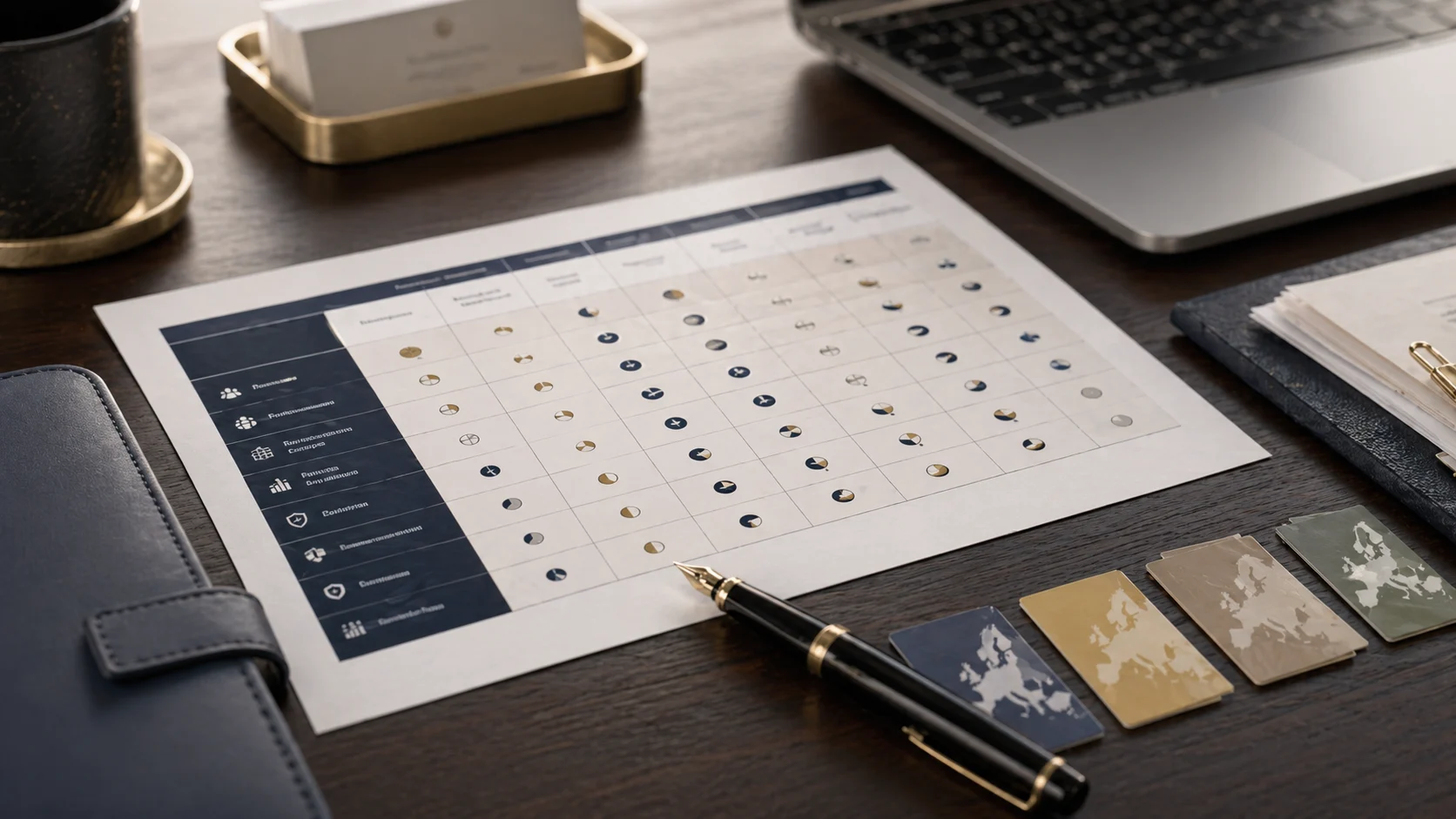
A simple scorecard can help internal stakeholders compare candidates consistently. Without one, the team may give too much weight to enthusiasm, personal chemistry, or the first promising meeting.
Where Japanese Companies Can Find Distributor Candidates in Europe
Generic online search is rarely enough. It can produce names, but not necessarily credible or relevant partners.
Trade shows and sector conferences are often useful because they show who is active in the category. Exhibitors, speakers, sponsors, and repeat attendees can all be potential candidates or sources of market intelligence. If a Japanese company plans to visit a European trade show, it should identify and contact target partners before the event rather than relying only on booth conversations.
Industry associations, trade directories, chamber networks, and local business organizations can also help. The key is to use sources relevant to the product category and target country, not broad directories with limited qualification value.
Warm introductions are especially valuable. Existing customers, suppliers, logistics partners, consultants, banks, trade agencies, and business networks may know which companies are active, respected, or worth avoiding.
Competitor research can also reveal useful candidates. Review competitor channel pages, reseller listings, marketplace activity, local press releases, case studies, and event announcements. This can help map the distributor landscape and identify companies already serving similar buyers.
LinkedIn and company databases can support research, especially for identifying commercial decision-makers. But they should be used carefully. A company may look relevant online while having limited access to the buyer segment you need.
For Japanese teams without local market context, a Japan-Europe business network can help separate useful contacts from weak leads. This is often where relationship quality matters most.
How to Build a Longlist and Shortlist of Distributor Prospects
A structured longlist keeps the search organized.
For each candidate, capture company name, country coverage, product category fit, customer base, channel type, website quality, leadership contacts, source of introduction, and any visible proof of activity.
Then remove companies that are clearly poor fits. Common reasons include inactivity, weak category relevance, the wrong customer base, direct competition, unclear business model, poor communication quality, or no evidence of serving the target region.
Strong candidates usually show several positive signals. They may represent complementary products, attend relevant events, publish useful product content, list customer examples, hold certifications, maintain partner pages, or have visible relationships in the industry.
It is useful to segment prospects into four groups:
- Primary targets: strong fit and worth direct outreach
- Secondary targets: possible fit but need more validation
- Information sources: useful for market insight but unlikely to become partners
- Poor-fit contacts: not worth pursuing now
The shortlist should guide outreach, meeting agendas, internal approval, and next steps. The goal is not to contact everyone. It is to focus time on the few candidates most likely to become serious commercial partners.
How to Vet a UK or European Distributor Before Committing
Distributor due diligence should cover both capability and behavior.
Start with market access. Which customers, industries, regions, and buyer roles can the distributor realistically reach? Ask for examples, not broad claims. A useful partner should be able to explain where demand may exist and which buyer segments should be approached first.
Then assess sales capability. How does the distributor generate leads? How do they manage pipeline, run demos, negotiate deals, report progress, and handle lost opportunities? A distributor that cannot describe its sales process may struggle to launch a new supplier effectively.
Category fit is equally important. The partner should understand the technical, regulatory, cultural, and commercial requirements of the product. For some products, this may include certifications, documentation, installation, training, warranty handling, or local compliance expectations.
Operational capacity also matters. Can the distributor manage logistics, inventory, service, returns, customer support, or local documentation if needed? If not, the Japanese company must decide whether it can provide those functions directly.
Reputation should be checked through references, partner history, public signals, litigation indicators where available, industry feedback, and local contacts. No single signal is perfect, but patterns matter.
Finally, evaluate commitment and communication quality. Ask what resources they would allocate, what targets they believe are realistic, and what they need from the Japanese company to succeed. Slow, vague, or inconsistent follow-up during the evaluation phase often predicts future partnership issues.
Key Questions to Ask Distributor Candidates in the First Meeting
A first meeting should be structured enough to reveal fit but open enough to learn from the candidate.
Useful questions include:
- Which customer segments would you target first for our product, and why?
- Which existing customers or industries in your network match our ideal buyer profile?
- What similar products or Japanese brands have you represented before?
- How do you typically launch a new supplier in your market?
- What marketing, sales, technical support, or localization would you expect from us?
- How long would it take to validate demand and identify the first serious opportunities?
- What would make this partnership commercially attractive for your team?
- Would you expect exclusivity, and what performance commitments would justify it?
- How do you report pipeline progress, customer feedback, and lost opportunities?
The answers should help the Japanese company understand not only whether the distributor is interested, but whether they have a credible plan.
Common Mistakes Japanese Companies Make When Choosing European Distributors
One common mistake is choosing the first enthusiastic contact. Interest is not the same as capability. A serious search should compare several qualified candidates before committing.
Another mistake is granting exclusivity too early. Exclusivity can be appropriate in some cases, but only when territory, performance expectations, review periods, and exit terms are clear.
Japanese companies may also assume one partner can cover all of Europe. In reality, language, regulation, logistics, buyer behavior, and sector networks vary significantly. A strong UK distributor may not be suitable for Germany or France. A strong Benelux partner may not be able to support Southern Europe.
Other avoidable mistakes include relying only on directories, failing to prepare English-language materials, entering meetings without pricing logic, and underestimating cultural differences in speed, directness, negotiation style, and follow-up.
Distributor search is not complete after introductions. The real work is qualification, pilot activity, market feedback, and disciplined follow-up.
How to Prioritize Markets Before Selecting Distributors
A distributor search should be connected to country selection.
Japanese companies should compare target markets by customer demand, regulatory complexity, competition, logistics, pricing tolerance, language needs, and ease of relationship-building.
The UK can be a practical first step for some Japanese companies because of English-language business communication, established Japan-related networks, and a distinct market structure. But it is not automatically the right first market for every product.
Germany, France, the Netherlands, Italy, Spain, the Nordics, and other European markets may each require different partner profiles and localization strategies. A distributor with strong coverage in one country may not be suitable for wider European expansion.
Early conversations with distributors, advisers, buyers, and local business networks can help validate which market should come first. A phased plan is usually more realistic: research, introduction, qualification, pilot, performance review, then broader rollout.
What Materials Japanese Companies Should Prepare Before Distributor Outreach
Strong materials make distributor conversations more productive.
At minimum, prepare a concise English company overview. It should explain the product category, target customers, differentiation, and current traction in Japan or other markets.
Product information sheets should include specifications, use cases, certifications, pricing assumptions, logistics requirements, and support expectations. If technical documents are not ready in English, the company may struggle to move serious candidates forward.
It is also useful to prepare target customer criteria, examples of successful customer outcomes, and a draft partner value proposition. A distributor needs to understand why representing the product would be commercially attractive.
Before outreach, align internally on margin expectations, minimum order quantities, lead times, warranty, after-sales service, marketing support, and decision authority. European candidates will lose confidence if the Japanese team cannot answer basic commercial questions or approve next steps.
How a Japan-Europe Business Network Can Support Distributor Search
A relationship-led business network can reduce uncertainty before a Japanese company commits to a distributor agreement.
Warm introductions can make outreach more credible, especially when approaching companies that receive many supplier inquiries. Local context can also help the Japanese team understand whether a candidate is active, relevant, and respected in the target market.
Bilingual and cross-cultural support can be valuable during early conversations. Japanese executives and European stakeholders may have different expectations around speed, directness, meeting preparation, negotiation, and follow-up. Good communication support helps both sides clarify expectations before misunderstandings become business problems.
TMC World Network helps Japanese companies build trusted business relationships and explore growth opportunities across the UK and Europe. For companies that are not ready for a local office or a full consulting engagement, a network-led approach can be a practical first step.
Support may include partner mapping, meeting coordination, first-visit planning, interpretation, follow-up, and early market-entry roadmap development.
What a Practical Distributor Qualification Process Looks Like
A disciplined process can prevent wasted time and weak agreements.
Step 1: Define the target market, customer segment, product requirements, and partner criteria.
Step 2: Build a longlist using trade events, industry databases, referrals, local networks, and competitor channel research.
Step 3: Screen candidates for category relevance, geographic coverage, market access, reputation, and communication quality.
Step 4: Hold structured introductory meetings using consistent questions and a clear scorecard.
Step 5: Validate references, customer access, operational capability, and commercial motivation.
Step 6: Run a limited pilot, market test, or non-exclusive trial before granting broader rights.
Step 7: Review results, refine the market-entry plan, and formalize the partnership only when expectations are clear.
This process does not guarantee success, but it gives the Japanese company a stronger basis for decision-making.
When Should a Japanese Company Start Looking for European Distributors?
Start earlier than most teams expect.
If the company plans to attend a UK or European trade show, begin research before the event. Meetings should be arranged around qualified prospects, not chance conversations on the exhibition floor.
Distributor search should also begin when leadership is evaluating overseas expansion, before committing to a local office, hiring plan, or major marketing budget. Early partner conversations can reveal whether demand assumptions are realistic.
If the company has received inbound interest from Europe, it should begin qualification quickly. Not every inquiry is serious, and not every interested company is suitable.
For complex B2B products, distributor qualification can take months. Technical review, regulatory questions, executive alignment, sample testing, pricing discussions, and internal approval all take time.
How to Measure Whether a Distributor Search Is Working
Activity alone is not enough.
Track the number of relevant candidates identified, qualified meetings held, and candidates advancing to second conversations. More importantly, assess the quality of those conversations.
Good candidates should be able to name realistic customer segments, provide market feedback, explain a launch path, and identify what they need from the Japanese company. Strong signals include customer introductions, sample requests, pilot discussions, technical reviews, and commercial proposals.
Also monitor response speed, quality of follow-up, senior involvement, and willingness to share market insight. These behaviors often reveal how the distributor will work after an agreement is signed.
A successful search should produce clearer market understanding even if the first candidates are not selected. The end goal is not a list of contacts. It is a prioritized path toward trustworthy commercial relationships.
Next Step: Build a Qualified UK or Europe Partner Shortlist
Japanese companies entering the UK or Europe should begin with a focused partner profile, clear target-country assumptions, and a practical qualification process.
The most useful first step is often not a contract. It is a shortlist of credible candidates, a structured outreach plan, and a way to compare partner fit before larger commitments are made.
TMC World Network can support Japanese companies that need trusted local relationships, market context, and practical guidance before committing to distributor contracts, local hiring, or office setup.
If your team is preparing for a UK or Europe business visit, responding to inbound interest, or starting a distributor search, consider beginning with a focused consultation to define target markets, map potential partners, arrange warm introductions, and plan follow-up.
Related reading
Continue the market-entry path

UK Market Entry Support for Japanese Companies: What to Look For Before Expanding

Market Entry Services for Japanese Companies in Europe: From Roadmap to Local Relationships

European Business Partner Search for Japanese Companies: How to Move Beyond Cold Outreach